How to make the climate transition socially fair? Fourth thematic report
The transition to a climate-neutral economy is not only about reducing emissions – it is also about ensuring that the costs and benefits of this transition are distributed fairly. This is particularly important in Central and Eastern Europe, where many households still face energy poverty, poorly renovated housing, and limited access to affordable transport.
The fourth thematic report was created as part of the ClimateFair Monitor project, which examines how to implement climate policies in a socially fair way. The report analyses the introduction of the Emissions Trading System 2 (ETS2) and the role of the Social Climate Fund (SCF) in protecting households most affected by higher fossil fuel prices in six Central and Eastern European countries and compares their approaches to the social aspects of the climate transition. It examines the development of National Social Climate Plans, the possible use of existing EU funding, preparations for the 2028-2034 funding period, and national sources of climate-related revenue. It also considers how additional ETS2 revenues could better address energy and transport poverty.
The findings show that the countries are at different stages of preparation and face different national circumstances. Some have already approved their Social Climate Plans, while others are still developing them; however, the report identifies several challenges common across the region, particularly the difficulty of ensuring that climate funding reaches the households that need it most.
In Latvia, the European Commission approved the Social Climate Plan in July 2026; it strongly emphasises improving building energy efficiency and addressing transport poverty. Around 60.75% of the funding is allocated to building-related measures and 36.75% to transport measures. However, the report notes that the planned measures are expected to reach only a relatively small share of people experiencing energy and transport poverty.
The other countries face somewhat different challenges. In Bulgaria, discussions have focused on energy and transport poverty and on how support should be targeted. In Poland, concerns remain about the transport component, including the limited diagnosis of transport poverty and the use of existing infrastructure programs. Romania places significant emphasis on building renovation and sustainable transport, while Slovenia combines energy-efficiency measures with demand-responsive transport and vouchers for energy efficiency and sustainable mobility.
These differences show that Social Climate Plans cannot follow a single common model. At the same time, the countries’ experiences point to several issues that need attention across the region.
One main concern is whether climate funding will actually reach people experiencing energy or transport poverty. Traditional funding schemes may require households to provide co-financing, make an initial investment, or complete complicated application procedures. These requirements can prevent the most financially vulnerable households from accessing support. For this reason, the report argues that support for the most vulnerable households should, where necessary, be provided through fully pre-financed grants, rather than programs that require households to contribute significant amounts of their own money.
Energy-efficiency investments are particularly important – building renovation, better insulation, and replacing inefficient heating systems can reduce both emissions and household energy costs. Replacing solid-fuel heating can also improve health and provide environmental benefits.
Transport requires a similar approach – in rural and poorly connected areas, owning a car may be a necessity rather than a choice. Encouraging people to switch to electric vehicles is not enough if low-income households cannot afford them or if reliable public transport alternatives are lacking. The report therefore highlights the importance of rural public transport, regional railways and transport on demand approach.
Another important issue is what will happen after the current EU funding period ends. The report considers whether existing MFF 2021-2027 funding can still be redirected towards Social Climate Plan objectives. In many cases, options are limited because the current programming period is already advanced.
The next funding period, MFF 2028-2034, could provide a greater opportunity to integrate social climate measures into national and regional investment programs. However, Social Climate Fund objectives could also become less visible if they are absorbed into broader funding frameworks. The report therefore stresses the importance of keeping social and climate objectives clearly defined and financially protected.
The report also examines national sources of climate-related revenue, including ETS1 revenues, CO₂-related taxes and environmental fees. The approaches differ between countries. In some cases, these revenues are already directed towards climate-related programs, while in others they become part of the general state budget. This raises an important question: if people are asked to pay more for fossil fuels to support the green transition, how should the resulting revenues be used?
Several priorities are proposed for using ETS2 and other environmental revenues- at the national level, governments should:
- protect ETS1, ETS2 and other environmental revenues through transparent and dedicated funding mechanisms;
- prioritise fully financed deep renovation for the lowest-income households;
- provide temporary direct income support where necessary to reduce the immediate impact of higher fossil fuel prices;
- invest in rural public transport, regional railways and demand-responsive transport;
- improve the identification and mapping of energy and transport poverty;
- establish accessible one-stop-shop services to help vulnerable households access renovation programs;
- strengthen research and data on energy poverty; and
- combine the replacement of inefficient solid-fuel heating with information about the health and environmental effects of illegal waste burning.
At EU level, the report calls for stronger safeguards in future National and Regional Partnership Plans, including clear earmarking of ETS2-related funding. Monitoring should focus not only on how much money has been spent, but also on whether the measures produce meaningful social and environmental results. Civil society organisations and municipalities should also have a meaningful role in designing and monitoring social climate measures.
Ultimately, the fourth thematic report shows that a socially fair climate transition requires more than providing new funding. The Social Climate Fund creates an important opportunity; still, its impact will depend on whether support reaches the households that need it most and whether investments address the underlying causes of energy and transport poverty.
The experience of the six Central and Eastern European countries shows that no single solution can achieve a fair transition. However, targeted investment, transparent funding, accessible support and meaningful public participation can help make climate policies more effective and socially fair.
This text summarises the main findings and recommendations of the fourth thematic report. The full report provides a more detailed analysis of the six countries, their Social Climate Plans, funding opportunities and national climate-related revenues, as well as the full set of recommendations.
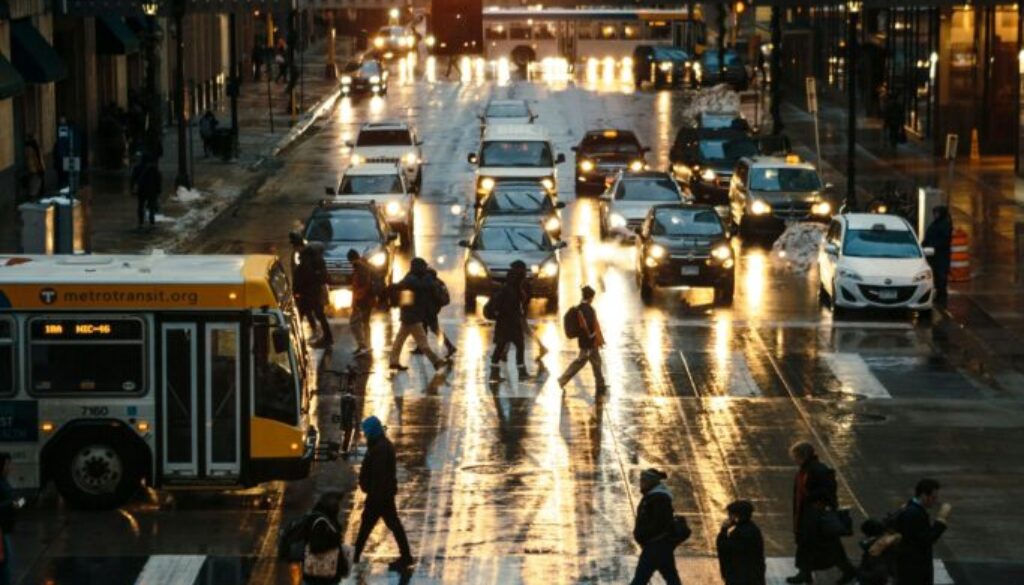
Photo: Unsplash/Donny Jiang